Search

BEROKINA.COM

Category

Movies

Berlinale: ‘The Foolish Bird’ by Huang Ji & Ryuji Otsuka

201711157_2_img_fix_700x700

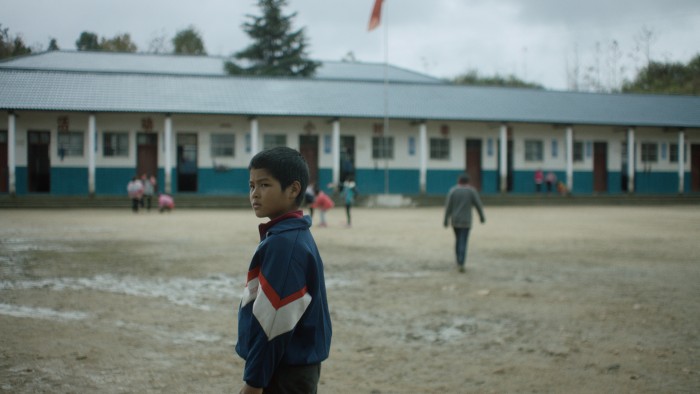
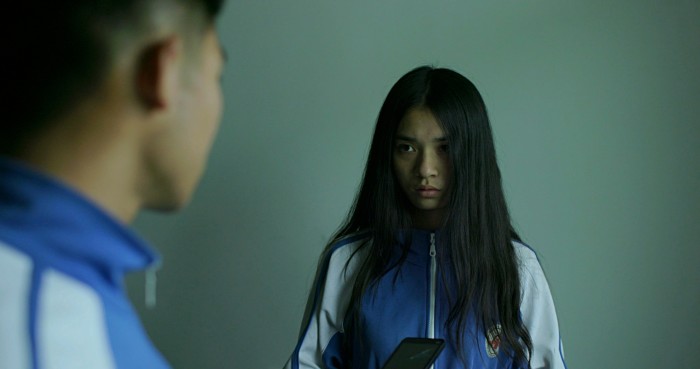
For the sake of her absent mother, 16-year-old Lynn attempts to get into the local police academy. Meanwhile, she keeps her head above water financially by getting caught up in some shady business involving stolen cell phones. When her only friend May suddenly stops being in touch, the introverted student is haunted by the feeling that her life is spiralling out of control. Money is an all-pervasive topic in her environment. Surrounded by corruption, sexual violence and the omnipresence of new media, Lynn searches for a path through the labyrinth of the present. Precise images tell a story of the isolation and lack of perspective prevalent in a small city in today’s China.
Berlinale: ‘Ciao Ciao’ by Song Chuan

201713529_1_img_fix_700x700

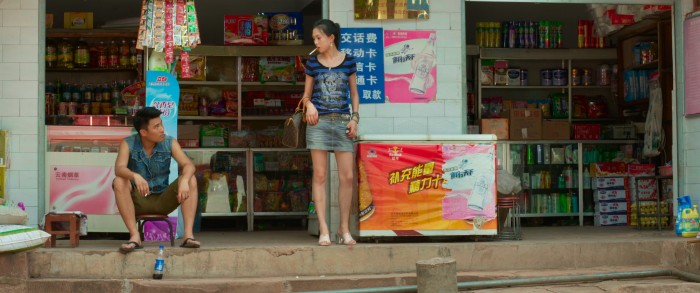
City girl Ciao Ciao’s roots are in the country where she is paying her parents a visit. She’s confident that she will be returning to the city soon. Until then she is killing time texting her girlfriend in the megalopolis, Kanton. Together, they are planning to open up a shop of their own. But the longer she spends in this little backwater, the more her standard outfit of Louis Vuitton bag, heels and a Hermès scarf begins to look like a joke against the vividly green landscape. The local hairdresser, who comes from Kanton, would seem to be the only one who understands her. When she gets involved with Li Wei, the good-for-nothing, mostly inebriated son of a corn whiskey distiller – a connection that her mother and Li Wei’s father would seem to have engineered – a drama à la Tennessee Williams begins to take its course. Contrasting the wide expanse of the landscape with the faces of the protagonists, Song Chuan has found a powerful visual language for his portrait of the dissatisfied Ciao Ciao who struggles against rural life, but finds herself sucked in by it. In this seeming idyll there lurks a dangerous sense of frustration that is just waiting for an opportunity to burst out.

Berlinale: ‘Ghost in the Mountains’ by Yang Heng

201718719_2_img_fix_700x700

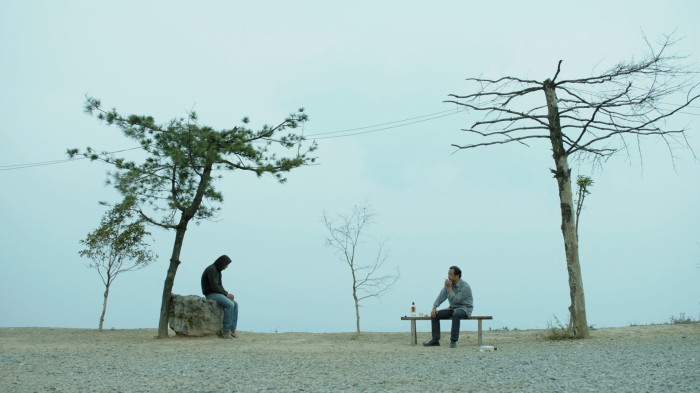
A godforsaken region in highland China. The body of a man who has been beaten to death is found on the mountainside. The police station and a hospital would appear to be the only places still functioning in this impassable wilderness strewn with ruined buildings and forlorn-looking streets. This is the home to which Lao Liu is now returning after an absence of many years. He pays a visit to the grave of a friend who died in an accident, shares with his friend’s sister memories of happier times before he left her, and reencounters A Jie, who is mixed up in criminal activities and dreams of being able to see the sea once in his life. Barely anyone stays here. The younger generation has moved to the big cities in search of a better life either through marriage or by securing a factory job. A Jie has other plans and is in need of Lao Liu’s help. But following an encounter with a monk Lao Liu finds himself withdrawing into the spiritual world he once sought to escape. Yang Heng’s masterful, painterly cinematic images are suffused by magical serenity; the screen becomes a hypnotic space through which the remaining inhabitants of this Chinese provincial backwater wander trance-like, trying to forge their own way in life.

Berlinale: ‘Have a Nice Day’ by Liu Jian

170217_sw_0863_img_fix_1200x800

A city in southern China and a bag containing a million yuan draws several people from diverse backgrounds with different personal motives into a bloody conflict. Philosophising gangster bosses, ageing hitmen, men and women who are tired of the struggle to survive – anyone who happens to have the bag holds on to it tightly, as if it were a lifeline. Hao ji le is a black comedy; the film’s inscrutable, laconic humour holds up a magnifying glass to attitudes to life and social conditions. Humankind’s constant greed meets a deeply insecure country in transition. The reduced realism of the film’s animated tableau heightens and stylises the mood in today’s China, caught between stasis and a new beginning. The protagonists of this macabre dance wander, strangely lost, through precisely drawn but radically changing cityscapes. The signs and symbols of capitalism impose themselves everywhere, but most people are excluded from the life these signs promise. And Mao Zedong’s image still graces the banknotes.

Berlinale: ‘Inmates’ by Ma Li

201719254_1_img_fix_700x700

The first conversation with the friendly caregiver already sends a chill down the spine: “What’s your former profession?” she asks jovially. The newly admitted patient hesitates. “Why former? I still work as a university lecturer.” Director Ma Li spent over a year observing the patients at a mental asylum in northern China. Many of them have been here for years, yet there are no traces of their stay. No pictures adorn the walls, nor are there any personal possessions on the dormitory night tables. The inmates wear the same patterned pyjamas day and night. The heavily desaturated colours lend the film an almost black-and-white quality, underscoring the chilly atmosphere. When someone wears their own jumper here over the institutional clothing, it comes across like an act of resistance. And yet while the seasons change outside, any hope of ever experiencing freedom again wanes. Over five intense hours, Qiu raises the question of how ill-defined the border between sanity and madness actually is. The film provides no answer. But it allows us to experience how quickly exceptional circumstances can become routine.

Berlinale: ‘Stonehead’ by Zhao Xiang

201713661_1_img_fix_700x700

A Chinese village deep in the countryside: home to ten-year-old Zhu Hongbo, whom everyone calls ‘Stonehead’. He is one of many children whose parents have moved to the big cities as migrant workers. With only their grandparents and a few teachers around, they have to find others to look up to – or become role models themselves. As a county model student, Stonehead receives not just a certificate, but also a brand-new football. Yet his joy at receiving this reward soon makes way for disappointment. With its documentary-like gaze, Zhao Xiang’s debut film tells the moving and astute tale of children left behind in rural China, and how their individual wishes come into conflict with obligations towards the community.

Create a free website or blog at WordPress.com.

Up ↑